
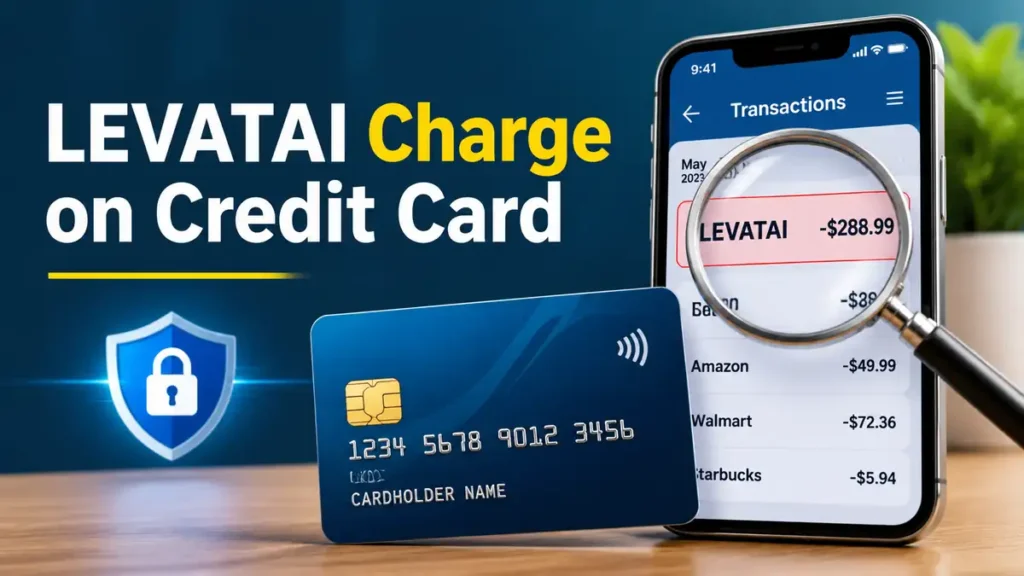
A LEVATAI charge on your credit card may be related to proximity cards or access-control supplies. Public purchasing records from Hillsborough Area Regional Transit (HART) in Florida list purchases under this descriptor. However, these records do not confirm the source of every transaction. If you don’t recognize the charge, check your receipts, recent purchases, and authorized cardholders before assuming it is fraud. If the payment remains unexplained, contact your credit card issuer to investigate.
What Company Is Behind the LEVATAI Charge?
A credit card billing descriptor is the merchant name or abbreviated label displayed on your statement. Levata supplies business technology products, while ID Wholesaler sells ID card printers, badges, proximity cards, and related identification supplies.
Proximity cards allow authorized users to access compatible security systems. These products offer a possible explanation for the descriptor, but the name alone does not establish which merchant processed your payment. Also, Levitate AI marketing software is a separate name and should not be confused with Levata.
What Do Public Records Reveal About LEVATAI?
Official HART purchasing records provide two useful examples:
- May 29, 2025: A $288.99 LEVATAI purchase described as “Proximity Cards.”
- March 10, 2026: A $528 purchase for 200 ValuProx clamshell PVC proximity cards for facility access.
Sources: HART May 2025 report and HART March 2026 report.
These records show that LEVATAI has been used for access-control card purchases. They do not prove that every charge with this descriptor comes from the same merchant or relates to the same products.
Why Is LEVATAI Charging My Credit Card?
If you see this charge, consider these possibilities:
An ID Card or Access-Control Purchase
Your employer, school, or organization may have purchased employee badges, proximity cards, or security supplies using a company card.
A Purchase by an Authorized Cardholder
A colleague or another authorized user may have made a purchase on a shared business credit card.
An Unrecognized Transaction
If neither explanation matches your records, don’t ignore the charge. Verify the merchant and ask your card issuer to investigate if the payment remains unfamiliar.
Is the LEVATAI Charge Legitimate or a Scam?
A LEVATAI charge is not automatically fraudulent. Public records document purchases under this name, but they cannot verify your individual transaction. Check the amount, date, receipts, and authorized users first. If you cannot identify the payment, report it to your card issuer promptly and ask about your dispute options.
How to Verify and Dispute a LEVATAI Charge
Follow these steps if you don’t recognize the transaction:
- Review your statement: Record the exact descriptor, amount, and transaction date.
- Search your records: Check email receipts, order confirmations, and workplace purchasing records.
- Verify the merchant: Contact Levata or ID Wholesaler through official channels if you suspect a connection. Don’t assume either company processed the payment without confirmation.
- Call your card issuer: Use the phone number on the back of your card or the issuer’s official website.
- Report unauthorized activity: Ask about disputing the charge, locking your card, or getting a replacement.
For U.S. credit-card billing errors, the Consumer Financial Protection Bureau advises sending written notice within 60 days after the statement containing the error was sent. Follow your issuer’s instructions and keep copies of your communications.
Frequently Asked Questions
What is LEVATAI on my bank statement?
It is a billing descriptor that appears in public purchasing records for proximity cards. Your individual transaction still needs verification.
Is LEVATAI connected to Levata or ID Wholesaler?
The records show LEVATAI purchases for proximity cards, and these companies operate in related product categories. However, the records alone do not establish the source of every charge.
Is LEVATAI a recurring subscription?
Available purchasing records do not establish that LEVATAI is a recurring subscription. Check your statement for repeated transactions and verify them with your issuer.
What should I do if I don’t recognize the charge?
Check your purchase history and authorized users. If the transaction remains unexplained, contact your card issuer promptly to report it and discuss dispute options.
Final Thoughts
LEVATAI appears in public purchasing records for proximity-card purchases, but this does not identify every transaction carrying the descriptor. Review your records, verify the merchant, and contact your credit card issuer if you cannot recognize the charge.
Read Also:-ALM DIGITAL LTD Charge on Credit Card

Emma Rose is a U.S.-based personal finance writer and a regular contributor at Cardix.us. She focuses on topics like credit cards, credit scores, and everyday money management. Emma’s writing makes complex financial concepts simple and practical, helping readers make smarter credit and spending decisions with confidence.