
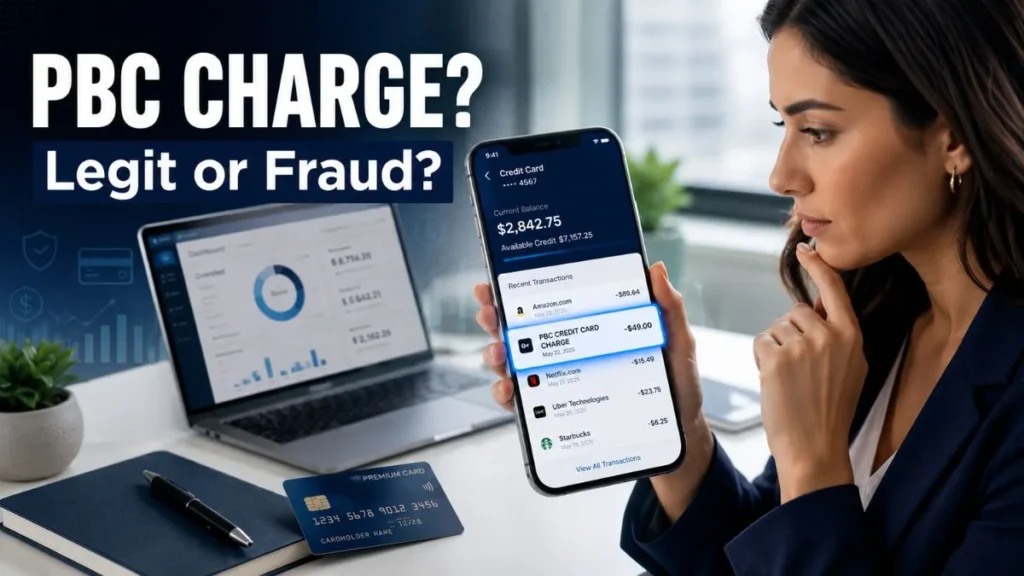
Have you noticed a PBC Credit Card Charge on your statement and wondered where it came from? You’re not alone. Many cardholders become concerned when they see this unfamiliar transaction because PBC can be linked to different companies, memberships, subscriptions, charities, or payment services. Understanding the source of a PBC Credit Card Charge is important to determine whether the transaction is legitimate or requires further action.
Quick Answer
A PBC Credit Card Charge is a transaction that includes “PBC” in the billing descriptor on your statement. It does not refer to a single company. The charge may be related to Anthropic (Claude AI), Change.org memberships, government payments, nonprofit organizations, or other merchant-specific transactions. The exact source can usually be identified by reviewing the complete transaction description, amount, and date.
What Is a PBC Credit Card Charge?
A PBC charge is a billing descriptor that appears on some credit card and bank statements. Since “PBC” can be used by multiple organizations, seeing it on your statement does not automatically identify the merchant.
In many cases, PBC stands for Public Benefit Corporation, but it may also be part of a merchant name, government agency, charity, or payment processor descriptor.
Most Common Sources of a PBC Charge
| Source | Common Reason | Recurring? |
|---|---|---|
| Anthropic PBC | Claude AI subscription or API usage | Yes |
| Change.org PBC | Membership or petition promotion | Yes |
| Palm Beach County | Government fees and services | Usually No |
| PBC Foundation | Donations and memberships | Optional |
| Vending Machines | Small retail purchases | No |
1. Anthropic PBC (Claude AI)
One of the most common modern sources of a PBC charge is Anthropic, the company behind Claude AI. If you have a Claude Pro subscription, Team plan, or API account, your statement may show an Anthropic PBC transaction.
2. Change.org PBC
Change.org operates as a Public Benefit Corporation. Charges may appear if you have:
- A monthly membership
- Petition promotion payments
- Recurring supporter contributions
3. Palm Beach County (PBC)
Some government-related transactions in Florida may include PBC in the billing description. These can include permits, parking fees, administrative services, or local government payments.
4. Charity and Nonprofit Payments
Certain nonprofit organizations use PBC in their names or billing descriptors. Donations, fundraising contributions, and recurring memberships may appear as PBC charges.
5. Vending Machine Purchases
In some reported cases, PBC-related charges have been linked to vending machines, self-service kiosks, and automated retail purchases.
Why Did I Get a PBC Charge?
The most common reasons include:
Recurring Subscriptions
- Claude AI subscriptions
- Membership programs
- Auto-renewing services
- Trial-to-paid conversions
One-Time Purchases
- Charitable donations
- Petition promotions
- Government payments
- Online service purchases
Shared Card Usage
Sometimes the charge may have been made by:
- A family member
- An authorized user
- An employee using a business card
How to Identify the Exact Source
Check the Full Transaction Description
Don’t focus only on “PBC.” Look for additional details such as:
- Anthropic PBC
- Change.org PBC
- PBC Foundation
- PBC Membership
The full descriptor often reveals the merchant.
Review the Transaction Amount
Small charges may indicate:
- Vending machine purchases
- Low-cost memberships
- Temporary authorizations
Recurring charges often suggest:
- Subscription renewals
- Membership fees
- Ongoing donations
Search Your Email
Look for:
- Claude AI receipts
- Anthropic billing emails
- Change.org receipts
- Membership confirmations
- Donation receipts
Review Recent Online Activity
Check your:
- Subscription accounts
- App purchases
- Membership platforms
- Donation history
- Online services
Is the Charge Legitimate or Fraudulent?
Signs the Charge Is Legitimate
- Matches a known subscription
- Matches recent activity
- Appears on a recurring billing schedule
- You received a confirmation email
Warning Signs of Fraud
- Unknown merchant
- Multiple unexplained charges
- Charges from unfamiliar locations
- No record of the purchase
If you cannot identify the transaction, investigate it immediately.
What Should You Do If You Don’t Recognize the Charge?
Step 1: Verify the Merchant
Review the full transaction description, amount, and date.
Step 2: Check Subscription Accounts
Look for active memberships, subscriptions, and online services linked to your card.
Step 3: Contact the Merchant
Many merchants can quickly explain the charge and provide billing details.
Step 4: Contact Your Card Issuer
Your bank may have additional merchant information not visible on your statement.
Step 5: File a Dispute
If the charge appears unauthorized, file a dispute with your credit card issuer immediately.
How to Stop Future PBC Charges
- Cancel unused subscriptions
- Disable auto-renewal settings
- Remove stored payment methods
- Monitor statements monthly
- Enable transaction alerts
These steps can help prevent unexpected recurring charges.
Frequently Asked Questions
What does PBC stand for on a credit card statement?
PBC does not have one universal meaning. It may refer to a Public Benefit Corporation, a nonprofit organization, a government agency, or another merchant descriptor.
Is PBC related to Claude AI?
Yes. If the descriptor includes Anthropic PBC, the charge is likely associated with Claude AI services.
Can Change.org charges appear as PBC?
Yes. Change.org operates as a Public Benefit Corporation, and some charges may include PBC in the transaction description.
Is PBC a scam?
No. Most PBC charges are legitimate, but any unfamiliar transaction should be investigated.
Can PBC charges come from donations?
Yes. Some charities and nonprofit organizations process donations using descriptors that include PBC.
Final Verdict
A PBC Credit Card Charge is not linked to a single company. The most commonly reported sources include Anthropic PBC (Claude AI), Change.org PBC, government agencies, nonprofit organizations, and certain retail transactions. The best way to identify the source is to review the complete transaction description, amount, and payment date. If you still cannot identify the charge, contact the merchant or your card issuer immediately for assistance.
Read Also:-PCH Classmates Charge on Credit Card

Emma Rose is a U.S.-based personal finance writer and a regular contributor at Cardix.us. She focuses on topics like credit cards, credit scores, and everyday money management. Emma’s writing makes complex financial concepts simple and practical, helping readers make smarter credit and spending decisions with confidence.