
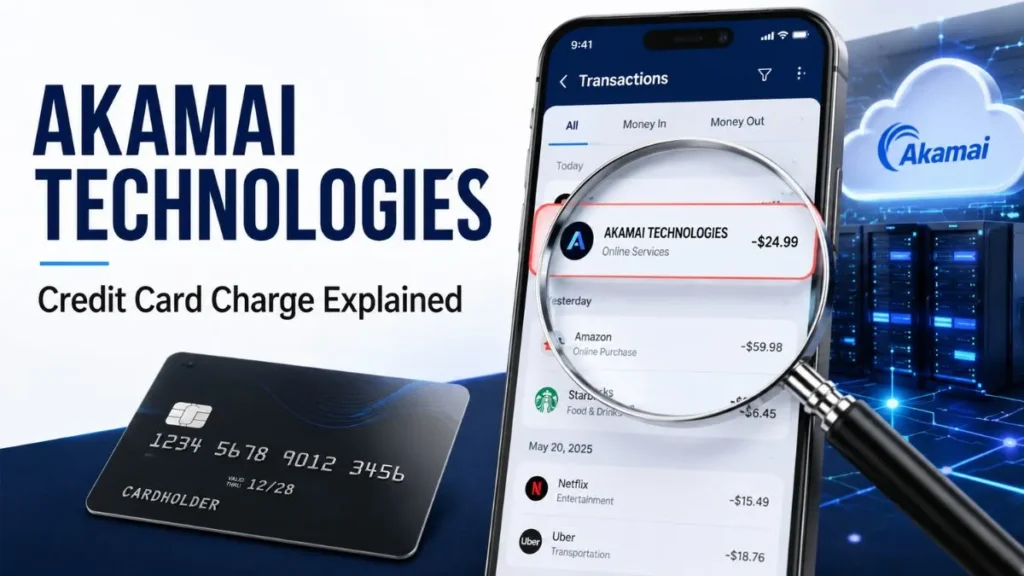
Have you noticed an Akamai Technologies charge on credit card statements and wondered what it means? Many cardholders become concerned when they see this unfamiliar charge because they don’t remember making a purchase from Akamai. In most cases, the charge is linked to cloud hosting, VPS servers, or services formerly billed through Linode, which was acquired by Akamai. This guide explains what the charge is, why it appears, and what to do if you don’t recognize it.
What Is Akamai Technologies?
Akamai Technologies is a global cloud computing, cybersecurity, and internet infrastructure company. It provides services such as cloud hosting, VPS servers, content delivery (CDN), storage, networking, and website security.
In 2022, Akamai acquired Linode, a popular cloud hosting provider. Since then, many customers who previously paid Linode have started seeing billing descriptors such as Akamai Technologies or Linode*Akamai on their credit card statements.
Why Is Akamai Technologies Charging My Credit Card?
An Akamai Technologies charge usually appears when a card is linked to an Akamai or Linode service. Common reasons include:
- Cloud Hosting and VPS Services:-If you host a website, application, or cloud server, the charge may be your regular hosting bill.
- Storage and Backup Services:-Cloud storage volumes, backups, and other resources can generate recurring charges, even if a server is no longer actively used.
- CDN and Network Usage:-Businesses that use Akamai’s content delivery and networking services may receive charges based on bandwidth and data transfer usage.
- Monthly Subscription Billing:-Many Akamai services renew automatically each month until the service is canceled.
- Usage-Based Charges:-Cloud services often charge based on resource consumption. Additional storage, bandwidth, or computing power can increase your monthly bill.
- Temporary Verification Charges:-A small charge, often around $1, may appear when a payment method is added or updated. This is typically a temporary authorization hold that disappears automatically.
Why Don’t I Recognize the Akamai Technologies Charge?
There are several reasons why a legitimate charge may seem unfamiliar.
- Linode Billing Descriptor Change:-Many former Linode customers do not realize that Akamai now handles billing for Linode services.
- Forgotten Hosting Accounts:-Old websites, test servers, personal projects, or cloud resources may still be active and generating charges.
- Developer or Agency Purchases:-A web developer, freelancer, or IT consultant may have used your payment method to purchase hosting or cloud services.
- Shared Credit Cards:-A family member, business partner, or employee may have authorized the transaction.
- Auto-Renewal Billing:-Cloud services often renew automatically, causing charges to continue until all active resources are removed.
Is Akamai Technologies a Legitimate Company?
Yes. Akamai Technologies is a legitimate publicly traded technology company that serves businesses worldwide. The company operates one of the largest internet infrastructure networks and provides cloud computing, cybersecurity, and CDN services.
Because Akamai acquired Linode, many users see unfamiliar billing descriptors and mistakenly assume the charge is fraudulent when it is actually linked to a valid hosting or cloud account.
Is the Akamai Technologies Charge a Scam or Fraud?
Most Akamai Technologies charges are legitimate. However, you should investigate the charge if:
- You have never used Akamai or Linode services.
- You cannot find invoices or billing emails.
- You do not own websites, servers, or cloud resources.
- The charge appears repeatedly without explanation.
Community reports show that while many users discover the charge is tied to an old hosting account, others have experienced unauthorized card usage. For this reason, verification is important.
How to Verify an Akamai Technologies Charge
Before disputing the charge, follow these steps:
- Search your email for “Akamai,” “Linode,” “Invoice,” or “Billing.”
- Check hosting accounts for active servers, storage, and backups.
- Review your billing and payment history.
- Ask family members, employees, or business partners.
- Contact Akamai support for assistance.
How to Stop Future Akamai Charges
If the charge is legitimate but no longer needed:
- Cancel unused hosting services.
- Delete active cloud resources.
- Remove unnecessary storage and backups.
- Remove saved payment methods.
- Confirm that all services have been fully canceled.
What If I Never Signed Up for Akamai?
If you are certain that you never used Akamai or Linode services:
- Contact Akamai support immediately.
- Report the transaction to your card issuer.
- File a billing dispute if necessary.
- Request a replacement card if fraud is suspected.
- Monitor future transactions closely.
Frequently Asked Questions
What is Akamai Technologies on my credit card statement?
It is usually a charge related to cloud hosting, VPS servers, storage, networking, or other cloud infrastructure services.
Why am I seeing Linode*Akamai on my statement?
Akamai acquired Linode in 2022, and many former Linode customers now see updated billing descriptors.
Can Akamai charge my card automatically?
Yes. Active services often use recurring monthly billing.
Can a powered-off server still generate charges?
Yes. Storage, backups, and other attached resources may continue generating charges.
Final Verdict
An Akamai Technologies charge on credit card statements is most commonly associated with cloud hosting, VPS servers, storage services, bandwidth usage, or other infrastructure products provided by Akamai Cloud Computing. In many cases, the charge is legitimate and connected to an active Akamai or former Linode account. However, if you cannot identify the service or find any billing records, contact Akamai support and your card issuer immediately to determine whether the transaction is authorized.
Read Also:-AIRLINES REPOR XD Credit Card Charge

Emma Rose is a U.S.-based personal finance writer and a regular contributor at Cardix.us. She focuses on topics like credit cards, credit scores, and everyday money management. Emma’s writing makes complex financial concepts simple and practical, helping readers make smarter credit and spending decisions with confidence.