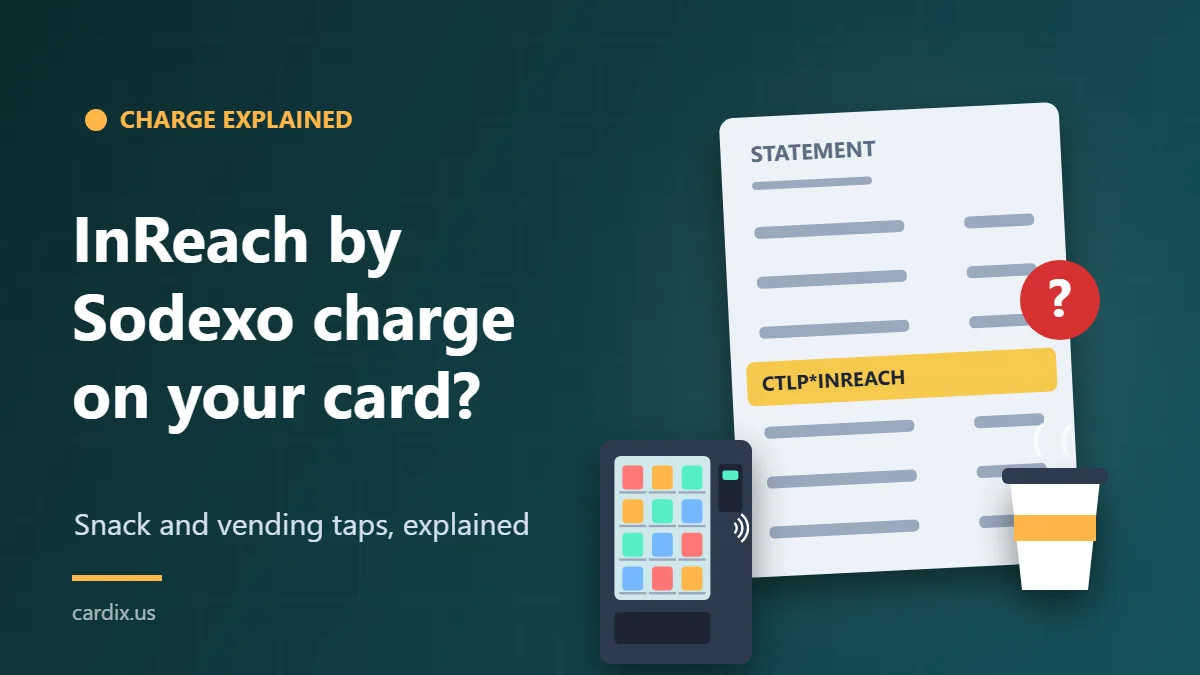
If you spotted an InReach by Sodexo charge on your credit card, it most likely came from a snack, drink, coffee, or grab-and-go meal bought at a self-service micro market or vending machine run by InReach, Sodexo’s convenience retail business. These stations sit inside workplaces, campuses, health facilities, and manufacturing sites, so the purchase may have happened somewhere you don’t think of as a “store.” This guide shows how the charge usually looks, how to confirm it’s yours, and what to do if it isn’t.
What InReach by Sodexo is
Sodexo is a large food service and facilities company. On its official U.S. site, Sodexo describes InReach as its convenience retail brand, covering micro markets, vending, workplace pantry services, office coffee, and water services for workplaces, campuses, health facilities, and manufacturing facilities.
A micro market is a small, unstaffed shop with open shelves and coolers. You pick items, scan them at a self-checkout kiosk, and pay by card, phone wallet, or app. InReach vending machines also take cashless payments. With no cashier involved, these small taps are easy to forget.
How the charge may appear on your statement
Banks may shorten descriptors, but charge-lookup sites report variations like these:
- CTLP*INREACH
- CTL*INREACH
- POS CTLP*INREACH followed by a city and state
- INREACH BY SODEXO or SODEXO INREACH
The “CTLP” or “CTL” prefix points to the card reader company, not a separate seller. In December 2022, InReach announced it had chosen Cantaloupe’s payments platform for its branches, which included about 18,800 vending machines and 1,200 micro markets at the time. Cantaloupe’s ticker symbol is CTLP.
The city on the line may be a regional office or processing location, not the building where you bought the item.
Why you might not recognize it
Most InReach charges are legitimate but easy to forget. Common reasons include:
- A quick workplace purchase. A soda or coffee from a break-room market, often for just a few dollars.
- Someone else used your card. A family member or coworker who has your card, or a phone wallet linked to it.
- A visit to a hospital, campus, or plant. Visitors often buy from vending machines in lobbies and waiting areas.
- A temporary hold. Some unattended machines authorize an estimated amount before the final sale posts.
- A failed vend. You were charged, but the item never dropped.
Pending holds versus real charges
Card readers at vending machines often don’t know the final amount when you tap. Cantaloupe’s consumer FAQ explains that banks place an estimated “hold” on your account and that this pending amount can take up to 24 to 72 hours to clear once the final sale posts. If a pending amount is larger than what you spent, wait a few days before disputing. If it stays or posts twice, take action.
Not the same as Garmin inReach
Garmin sells satellite communicators called inReach with monthly service plans. If your charge mentions Garmin or repeats on the same date each month for a similar amount, it’s probably a satellite subscription, not a Sodexo snack purchase. Check your Garmin account instead.
How to verify an InReach charge in 5 minutes
- Read the full line. Open the transaction in your banking app. Note the exact descriptor, amount, date, and time.
- Match the time to your day. Were you at work, school, or a medical visit at that time? Micro market charges are usually timestamped close to the purchase.
- Check your receipts and apps. Some markets email receipts or log purchases in a market app account. Search your inbox for “InReach” or “receipt.”
- Ask anyone who shares your card.
- Ask the site. If you can’t place it, your facility’s food service office or HR team can usually confirm whether InReach runs the break room.
How to get a refund for a vending or micro market problem
For a wrong price, a double scan, or an item that never dropped, start with the operator. It’s usually faster than a bank dispute.
- Look on the kiosk or machine for posted support details, such as a QR code, phone number, or website. Use what is printed there.
- Give the date, time, amount, location, machine or kiosk ID if shown, and the last four digits of your card. Never share your full card number.
- Because Cantaloupe supplies the card reader, Cantaloupe’s FAQ also directs people to its support team for refunds on items they didn’t receive.
- Note who you contacted and when, in case you dispute later.
When to dispute with your card issuer
Call your card issuer right away if you don’t recognize the charge after checking, if charges keep appearing, or if the operator doesn’t fix a real error. Under federal rules, the FTC explains that you can dispute billing errors, including unauthorized charges and goods not delivered as agreed. Your written dispute must reach the issuer within 60 days after the first bill showing the error was sent to you.
If your card was lost or stolen, report it and ask for a new number. According to the CFPB, your liability for unauthorized credit card charges is capped at $50, and if only your card number was stolen while you still have the card, you generally owe nothing.
Red flags that suggest fraud
- Several small InReach charges in a row at hours you weren’t anywhere near a machine.
- Charges right after your card went missing.
- Other unfamiliar small charges around the same date, which can mean someone is testing a stolen card number.
Related charge guides
Other self-service and food service charges look similar on statements. See our guides to the Canteen Vending charge on a credit card, the OVG Hospitality charge that often comes from venue concessions, and how vending card readers like AirVend work.
Frequently asked questions
Is an InReach by Sodexo charge a scam?
Usually not. InReach is a real Sodexo business, and most charges are small purchases at workplace or campus markets and machines. Verify it using the steps above before assuming fraud.
Why was I charged more than the item cost?
It’s often a temporary hold. Check again after a few days. If the final posted amount is still wrong, contact the operator using the details on the machine.

Emma Rose is a U.S.-based personal finance writer and a regular contributor at Cardix.us. She focuses on topics like credit cards, credit scores, and everyday money management. Emma’s writing makes complex financial concepts simple and practical, helping readers make smarter credit and spending decisions with confidence.