
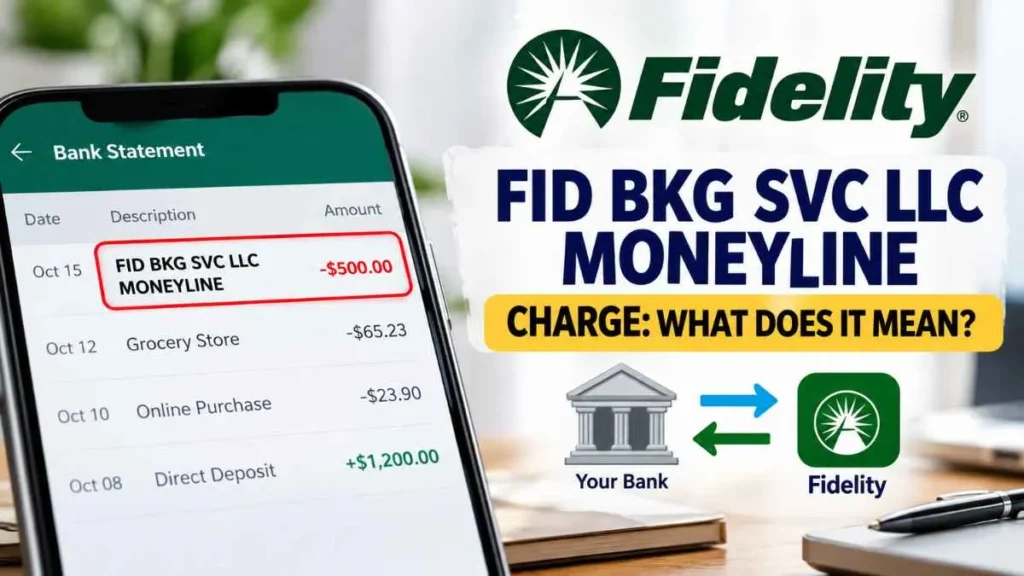
Seeing a FID BKG SVC LLC MONEYLINE charge on your bank statement can be confusing. The description may look unfamiliar, especially if you do not remember making a payment.
In most cases, this entry relates to Fidelity and an electronic funds transfer. It usually shows money moving between a Fidelity account and a linked bank account, rather than a regular shopping purchase.
What Is FID BKG SVC LLC MONEYLINE?
FID BKG SVC LLC MONEYLINE is a transaction description linked to Fidelity electronic transfer activity.
The wording refers to Fidelity Brokerage Services LLC and its MoneyLine transfer service. Fidelity uses electronic funds transfers to move money between eligible Fidelity accounts and linked bank accounts.
Your bank may shorten or format the transaction description differently. As a result, the name on your statement may not look exactly like the company name you know.
The descriptor alone cannot identify the exact Fidelity account or purpose of the transaction. You need to compare the entry with your account activity.
Is It a Charge or a Bank Transfer?
Despite the word “charge,” this entry usually refers to a money transfer rather than a normal purchase.
For example, money can move in either direction:
Bank account → Fidelity
You may have transferred money to Fidelity to fund an account, add cash, or make a contribution.
Fidelity → Bank account
A withdrawal or cash transfer may send money from Fidelity to your linked checking or savings account.
Your bank may show either transaction as an ACH debit or credit.
Why Did FID BKG SVC LLC MONEYLINE Appear?
Several common situations can explain this transaction.
You Transferred Money to Fidelity
A transfer from your bank account to Fidelity can create this description. You might have funded a brokerage account, added cash, or made a scheduled contribution.
Fidelity Sent Money to Your Bank
A credit may appear when Fidelity sends money to your bank account. This can happen after a withdrawal, cash transfer, distribution, or another eligible transaction.
You Set Up a Recurring Transfer
An automatic transfer can appear even when you did not manually start it that day. An earlier instruction may have scheduled regular contributions or withdrawals.
Another Fidelity Account Generated the Transfer
The transaction could relate to a brokerage, retirement, HSA, 529, or Cash Management account. However, the statement description alone cannot confirm which account generated the entry.
What Does a Debit Mean?
A debit means money left your bank account.
For example:
FID BKG SVC LLC MONEYLINE – $500
The $500 may have moved from your bank account to Fidelity.
Check the transaction date and amount against your Fidelity transfer history. A matching entry can help confirm the source.
What Does a Credit Mean?
A credit means money entered your bank account.
For example:
FID BKG SVC LLC MONEYLINE + $1,000
The amount may have come from a Fidelity withdrawal, cash transfer, distribution, or another payment.
Compare the date and amount with your Fidelity activity to find the exact transaction.
Is FID BKG SVC LLC MONEYLINE a Scam?
The descriptor itself does not prove that a transaction is a scam. Legitimate Fidelity transfers can use this type of description.
An unfamiliar transaction still needs attention. Someone could make an unauthorized transfer if they gain access to your account or use an existing transfer authorization.
The CFPB provides guidance on unauthorized electronic fund transfers and consumer protections.
I Don’t Recognize This Transaction. What Should I Do?
Follow these steps:
- Check your Fidelity activity. Look for a transfer with the same date and amount.
- Review recurring transfers. An older automatic instruction may explain the entry.
- Ask joint account holders. Another person with account access may have made the transfer.
- Contact your bank. Ask for the ACH transaction details if you still cannot identify it.
- Contact Fidelity. Provide the date, amount, and complete statement description.
If you believe someone made the transfer without your permission, report it to your bank and Fidelity as soon as possible.
What Does PPD Mean?
Some statements may show:
FID BKG SVC LLC MONEYLINE PPD
In ACH terminology, PPD means Prearranged Payment and Deposit. It is a Standard Entry Class code used for certain ACH transactions.
The PPD code does not tell you the exact reason for the payment. You still need to check the transaction details.
Why Does the Description Look Different?
Banks can display the same transaction in different formats. You might see:
- FID BKG SVC LLC MONEYLINE
- FID BKG SVC LLC MONEYLINE PPD
- EFT ELECTRONIC FUND TR FID BKG SVC LLC MONEYLINE
- FID BKG SVC LLC MONEYLINE ACH
A different format does not automatically mean a different company or payment type.
How Can You Verify the Transaction?
Use three details when checking the entry:
Date: Does it match a Fidelity transfer?
Amount: Does the dollar amount match your Fidelity activity?
Direction: Did money leave your bank account or enter it?
When all three details match, you can usually identify the related transfer. If nothing matches, contact your bank and Fidelity for clarification.
Frequently Asked Questions
Is FID BKG SVC LLC MONEYLINE a Fidelity fee?
Usually, this description refers to an electronic transfer involving Fidelity rather than a standard service fee or retail purchase.
Does MONEYLINE mean money was transferred?
Generally, yes. The descriptor is associated with electronic money transfers involving Fidelity and linked bank accounts.
Can this transaction be unauthorized?
Yes. A legitimate transaction description does not guarantee that a particular transfer was authorized. Check your records and report unfamiliar activity promptly.
Should I contact my bank or Fidelity?
If you cannot identify the transaction, contacting both can help. Your bank can provide ACH details, while Fidelity can check its account activity.
Bottom Line
A FID BKG SVC LLC MONEYLINE charge usually refers to a Fidelity-related electronic funds transfer, not a normal purchase. The transaction may move money between your bank account and Fidelity.
If the date and amount match a transfer you recognize, it may simply be normal account activity. When the transaction remains unfamiliar, check your Fidelity records and contact your bank and Fidelity promptly.
Read Also:-USAT MEDIA Charge on Credit Card

Emma Rose is a U.S.-based personal finance writer and a regular contributor at Cardix.us. She focuses on topics like credit cards, credit scores, and everyday money management. Emma’s writing makes complex financial concepts simple and practical, helping readers make smarter credit and spending decisions with confidence.