
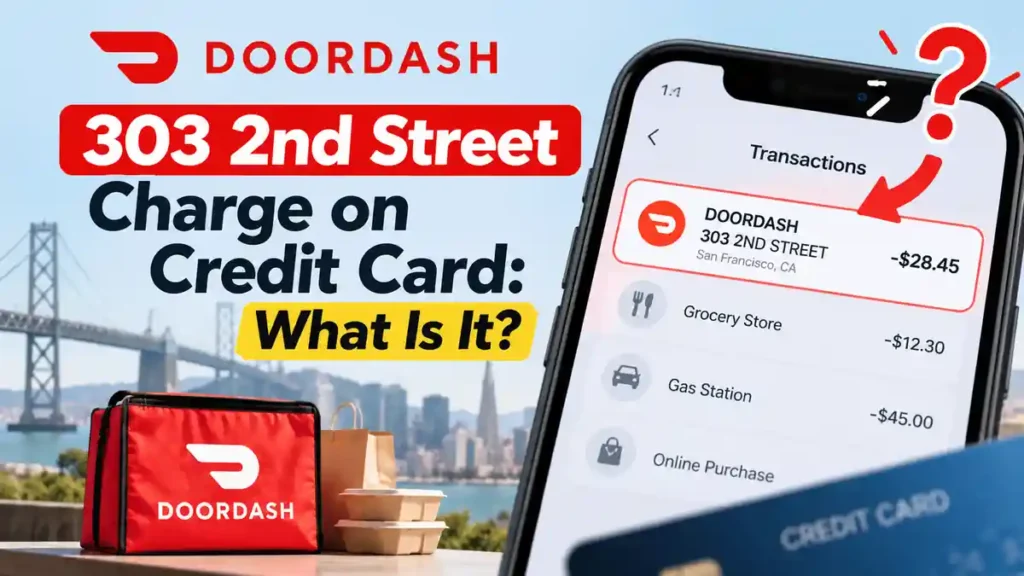
The 303 2nd Street charge on credit card statements is strongly associated with DoorDash, Inc., a food delivery company headquartered in San Francisco, California. If you notice this unfamiliar charge, it may relate to a food order, grocery delivery, or DashPass subscription. Official corporate records and bank documents support the connection to DoorDash. However, the address alone cannot confirm the exact purchase or prove fraud. Here’s how to identify the charge and what to do if you don’t recognize it.
What Is 303 2nd Street?
303 2nd Street is a business address in San Francisco, California, associated with DoorDash’s corporate headquarters. The company’s SEC filing lists this address as its principal executive office.
When a payment is processed through DoorDash, your bank statement may display the company’s address instead of the restaurant’s name. A billing descriptor can help identify a likely merchant, but it does not confirm the exact order or service involved.
Why Is 303 2nd Street Showing Up on Your Bank Statement?
Several explanations are possible, depending on the transaction.
1. A DoorDash Food or Grocery Order
You or an authorized user may have placed a food or grocery order through DoorDash. Check your recent orders and receipts to see whether the amount and date match the charge.
2. A DashPass Subscription
DashPass is DoorDash’s paid membership program. If you signed up for a membership or free trial, you may see a recurring payment when your subscription begins or renews. Check your membership settings and billing history.
3. A Purchase Made by Someone Else
A family member or another authorized cardholder may have used your saved payment method. Ask anyone with access to your card whether they made a DoorDash purchase around the transaction date.
4. An Unauthorized Transaction
If nobody recognizes the charge, unauthorized card use is another possibility. However, an unfamiliar descriptor alone does not prove fraud. Investigate the payment before deciding what happened.
What Do Different 303 2nd Street Charge Descriptions Mean?
A MutualOne Bank document published on the Massachusetts government website lists disputed transactions containing DoorDash and the 303 2nd Street address.
Examples include:
DOORDASH FIV 303 2ND STREETDOORDASH BUR 303 2ND STREETDOORDASH MCD 303 2ND STREETDOORDASHASPA 303 2ND STREET
The additional letters may be merchant-related or payment-processing identifiers, but the document does not officially define their meanings. These examples support the DoorDash connection without identifying the exact purchase behind every charge.
How to Verify the 303 2nd Street Charge
Follow these steps to investigate the transaction:
- Check your statement: Note the exact amount, date, and complete descriptor.
- Review DoorDash orders: Compare recent purchases with the transaction details.
- Check DashPass: Look for active memberships, renewals, or trial conversions.
- Search your email: Find DoorDash receipts and order confirmations.
- Ask authorized users: Confirm whether someone else made the purchase.
- Contact DoorDash: If the charge remains unexplained, ask support to investigate it.
Never share your full card number or security code through an unverified communication channel.
What Should You Do If You Don’t Recognize the Charge?
Contact your bank or credit card issuer promptly if you cannot identify the payment. Report the transaction as unrecognized and ask how to dispute it.
If you suspect your card details have been compromised, ask your issuer whether you should lock or replace your card. Keep copies of relevant statements, receipts, correspondence, and dispute reference numbers.
For U.S. credit cards, the Consumer Financial Protection Bureau’s billing dispute guide explains how to dispute billing errors. Deadlines and protections depend on the account and applicable law, so follow your issuer’s instructions and act promptly.
Is the 303 2nd Street Charge Legitimate or Fraudulent?
| Situation | What it may indicate |
|---|---|
| Matching DoorDash receipt | Likely a recognized purchase |
| Matching DashPass billing | Possible subscription payment |
| Authorized family order | Potentially legitimate transaction |
| No matching order or receipt | Further investigation needed |
| Confirmed unauthorized use | Contact your issuer and dispute it |
The address is evidence of a DoorDash connection, not proof that a particular payment was authorized or fraudulent.
Frequently Asked Questions
What company is associated with 303 2nd Street?
The address is associated with DoorDash, Inc.’s corporate headquarters in San Francisco, California. Official corporate records and bank transaction descriptions support this connection.
Is 303 2nd Street a DoorDash charge?
It is strongly associated with DoorDash, but the descriptor alone cannot confirm the merchant behind every individual transaction. Check your account records and contact your issuer if necessary.
Why does my statement show San Francisco?
Your statement may display the company’s corporate location rather than the restaurant’s address or your delivery location.
Can this charge be from DashPass?
Yes, it may be a membership payment. Check your DashPass billing history and renewal details to confirm.
Can I get my money back for an unauthorized charge?
You may qualify for a refund or other protections, depending on the circumstances, applicable law, and your issuer’s investigation. Report the transaction promptly.
Final Verdict
The 303 2nd Street charge on credit card statements is strongly associated with DoorDash, Inc. A corporate filing confirms the company’s connection to the address, while a published bank document contains actual disputed transaction descriptors combining DoorDash with 303 2nd Street.
The payment may relate to a food order, grocery purchase, subscription, or another DoorDash transaction. If you do not recognize it, check your records and contact DoorDash or your card issuer. Verify the specific payment rather than assuming it is automatically legitimate or fraudulent.
Read Also:-AWX Charge on Credit Card

Emma Rose is a U.S.-based personal finance writer and a regular contributor at Cardix.us. She focuses on topics like credit cards, credit scores, and everyday money management. Emma’s writing makes complex financial concepts simple and practical, helping readers make smarter credit and spending decisions with confidence.